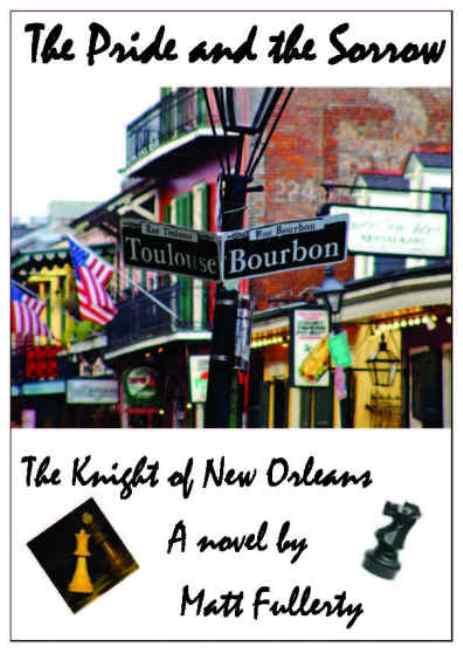
My novel about love, betrayal and chess in New Orleans: The Pride and the Sorrow

Showing posts with label usa. Show all posts

Sunday, March 28, 2010

The Case of Amy Bishop: Violence that Art Didn't See Coming

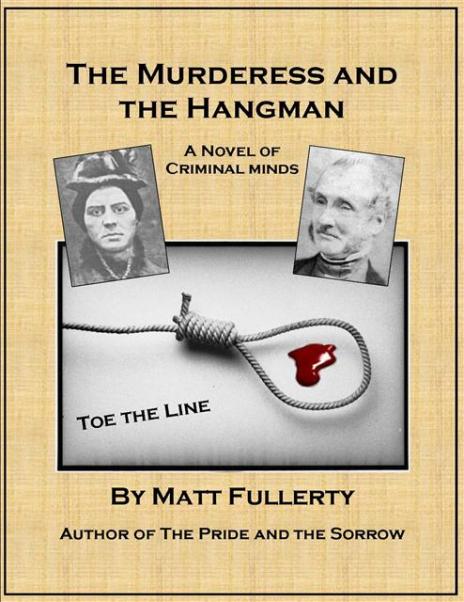
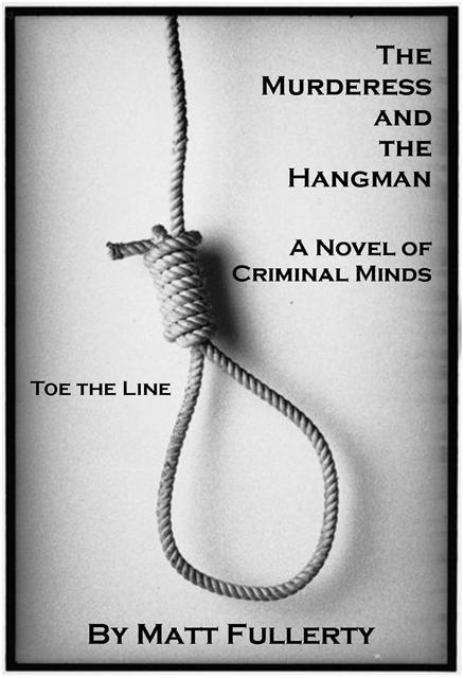
This is Kate Webster, female killer from my novel The Murderess and the Hangman. For more about the novel, please see my homepage here.

The following article from The New York Times deals with the role of female killers and art, particularly in light of the recent shootings by Amy Bishop, a professor at the University of Alabama.

--

When Ezra Pound declared in 1934 that “artists are the antennae of the race,” and Marshall McLuhan 30 years later called them people “of integral awareness,” both were using modern terms to update the ancient belief that works of the imagination might actually require a talent not only for invention but for attunement — for picking up signals already in the air. This is why the most forceful narratives and dramas seem less made up than distilled. They clarify events and experiences taken directly from the actual world.

Thus, the Jazz Age is better known through the fiction of F. Scott Fitzgerald, who captured its energies in real time, than through any number of retrospective studies. And the alienated teenager, that fixture of modern American life, didn’t fully exist until J. D. Salinger, with his faultless ear and attentive eye, coaxed him into being.

But every now and then, it seems, a gap is exposed. Events occur; art offers no guidance. The powers of imagination and attunement falter. Artists suffer a collective loss of awareness. “The culture” emits signals, but they are picked up only fitfully or are missed altogether.

Consider the case of Amy Bishop, the neuroscientist arrested for shooting six colleagues, killing three, at a department meeting at the University of Alabama in Huntsville. Rampages of this sort have become familiar. But with rare exceptions they have been the preserve of men: lonely, alienated psycho killers with arsenals of high-powered weapons and feverishly composed manifestos.

With remarkable suddenness Dr. Bishop has disrupted the pattern. When she reportedly discharged her 9-millimeter handgun, she also punctured longstanding assumptions, or illusions, about women and violence — particularly as a fuller picture of her past begins to emerge, much of it indicating a possible record of previous violent episodes, including the shooting death of her brother in 1986, and her suspected role in assembling a pipe bomb mailed to a faculty member at the Harvard Medical School in 1994, when Dr. Bishop was studying there.

It is not news that so-called senseless acts often unfold along the coordinates of an inner logic. This is what makes criminal violence so attractive a topic for artists and thinkers. The Western literary tradition, from Shakespeare to Dostoevsky, teems with pathologically violent men. Norman Mailer and Truman Capote wrote nonfiction masterpieces about them. They dominate the novels of Don DeLillo and Robert Stone, not to mention films by Sam Peckinpah, Francis Ford Coppola and Martin Scorsese.

But the landscape of unprovoked but premeditated female violence remains strangely unexplored. Women who kill are “relegated to an ‘exceptional case’ status that rests upon some exceptional, or untoward killing circumstance: the battered wife who kills her abusive husband; the postpartum psychotic mother who kills her newborn infant,” Candice Skrapec, a professor of criminology, noted in “The Female Serial Killer,” an essay included in the anthology “Moving Targets: Women, Murder and Representation” (1994).

Ms. Skrapec was writing at a time when Hollywood seemed preoccupied with women who commit crimes — in productions like “The Burning Bed,” the 1984 television film in which a battered wife finally sets her sleeping husband aflame, and “Thelma & Louise” (1991), in which a pair of women go on a outlaw spree after one of them is threatened with rape.

Both are essentially exculpatory parables of empowerment, anchored in feminist ideology. Their heroines originate as victims, pushed to criminal excesses by injustices done to them. The true aggressors are the men who mistreat and objectify them. So too with “Monster” (2003), in which Charlize Theron, in a virtuosic instance of empathy (and cosmetic makeover) re-enacted the story of Aileen Wuornos, a real-life prostitute who, after years of sexual abuse, began murdering her clients.

A decade or two ago this all made sense. The underworld of domestic abuse and sexual violence was coming freshly to light. And social arrangements were undergoing abrupt revision. The woman who achieved hard-won success in the workplace might well find herself, like the lonely stalker played by Glenn Close in “Fatal Attraction” (1987), tormented by the perfect-seeming family of the married man with whom she enjoys a weekend fling.

Much has changed since then, but the topic of women and violence — especially as represented by women — remains more or less in a time warp, bound by the themes of sexual and domestic trauma, just as male depictions of female violence are locked in the noir demimonde of fantasy, the slinky femmes fatales once played by Barbara Stanwyck and Lana Turner more or less duplicated by Kathleen Turner and Sharon Stone.

Put it another way. It is not hard to imagine Mr. DeLillo or Mr. Scorsese mapping the interior circuitry of Timothy McVeigh; Seung-Hui Cho, the Virginia Tech killer; or Bruce E. Ivins, the Army biodefense expert who, the F.B.I. concluded last week, committed anthrax terror in the aftermath of 9/11 — the paranoia, the lethal mix of fantasy and ruthless plotting. But what artist might do justice to Dr. Bishop and her complex story, as its details have so far been reported: the privileged upbringing; her stable marriage to a uxorious husband, who was also her collaborator on scientific inventions; their four children, some of whose homework Dr. Bishop is monitoring from her jail cell? And what of the accounts given by associates and neighbors of her personal qualities — assertive, bristling with sharp opinions, vocal on the subject of her brilliance, harboring fierce resentments?

The uncomfortable fact is that for all her singularity, Dr. Bishop also provides an index to the evolved status of women in 21st-century America. The number of female neurobiologists may still be small, but girls often outdo boys in the classroom, including in the sciences. (Mattel recently announced a new addition, Computer Engineer Barbie, to its line of popular dolls.) A Harvard Ph.D. remains a rare credential for women (as well as for men), but women now make up the majority of undergraduates at many prestigious colleges. And the tenure struggle said to have lighted Dr. Bishop’s short fuse reflects the anxieties of many other women who now outnumber men in the work force and have become, in thousands of cases, their family’s principal or only breadwinner.

These conditions have been developing for some years now. But the most advanced narratives of female violence seem uninterested in them. There is, for example, Marina Abramovic, a pioneer of performance art who will be honored in a major retrospective at the Museum of Modern Art in March, with 35 artists re-enacting five of her works. Ms. Abramovic, born in what was then Belgrade, Yugoslavia, first became a force in 1973 at the Edinburgh Festival, where she furiously stabbed a knife between her splayed fingers, bloodying 10 blades and tape recording the noises she made as she wounded herself. In 2002 Ms. Abramovic was still at it, exhibiting herself for 12 days in a downtown Manhattan installation, wordlessly moving among three raised platforms connected to the floor by ladders whose rungs were fashioned from large knives, their gleaming blades turned up.

There is also Karen Finley, whose avant-garde explorations of sexual violence put her in the middle of the federal arts-financing wars two decades ago. She is back onstage in “The Jackie Look.” Outfitted in bouffant and pearls, in imitation of Jacqueline Kennedy Onassis, Ms. Finley stands at a lectern and delivers a monologue on the female body — at one point shedding copious tears — and on the indignities ritually inflicted on public women (Michelle Obama no less than Mrs. Onassis).

All this is stimulating in its way, but it feels curiously outmoded. Although Ms. Abramovic and Ms. Finley are both charismatic presences, their antennae seem to have rusted. They persist in registering the dimmed signals of a bygone time.

For this reason, perhaps, the most useful glosses on Dr. Bishop may come from the world of popular, even pulpish, art — for instance, crowd-pleasing movies like “Black Widow,” “Blue Steel,” “The Silence of the Lambs,” Quentin Tarantino’s “Kill Bill” or even “Lost,” the ABC series. In all of them the hypothetical notion of empowerment gives way to the exercise of literal power. So too in crime novels written by women who specialize in the disordered or deranged mind. Genre art has its own limitations. But its strength is that it seeks to reanimate archetypes and is indifferent to ideological fashion.

“Everything is about power,” Patricia Cornwell, whose best-selling Scarpetta series is thick with forensic detail, maintained in an e-mail message, when asked what she made of the Bishop case. “The more women appropriate power, the more their behavior will mimic that of other powerful people.” Also: “Firearms are the great equalizer. You don’t have to be 6 foot 2 and weigh 200 pounds to kill a room full of people.”

Chelsea Cain, the author of a crime series that reverses the formula of “The Silence of the Lambs,” pitting a male detective against a female serial killer, suggested that Dr. Bishop is the latest version of an ancient figure, “the mother lioness that kills to protect herself and her family against perceived threats.”

In fact two middle-aged classics of genre literature eerily prefigure aspects of the Bishop case. In William March’s 1954 novel “The Bad Seed,” later adapted for both stage and film, an 8-year-old girl viciously murders a classmate but is protected by her mother, only to kill again. This parallels the allegations in Dr. Bishop’s case, at least according to the resurfaced police report on the death of her brother nearly a quarter-century ago.

No genre writer had sharper antennae than Shirley Jackson, whose gothic classic, “We Have Always Lived in the Castle,” first published in 1962, was reissued last fall. Its narrator is an 18-year-old multiple murderess who lives with her devoted sister and fantasizes about killing again. She is “socially maladroit, highly self-conscious, and disdainful of others,” Joyce Carol Oates wrote in a penetrating essay recently in The New York Review of Books. “She is ‘special.’ ” Words that ring ominously in the context of Dr. Bishop.

Ms. Oates, of course, has examined violence as thoroughly as any living American writer. When I asked her what she made of the case, she drew an implicit comparison between Dr. Bishop and Shirley Jackson’s narrator: “She is a sociopath and has been enabled through her life by individuals around her who shielded her from punishment.”

Ms. Oates’s feminist credentials are in good order. But her assessment comes from beyond the realm of predigested doctrine. It echoes the blunt assertion made by Ms. Cornwell: “People kill because they can. Women can be just as violent as men.”

--

Sam Tanenhaus, The New York Times, February 24, 2010


Thursday, February 25, 2010

A Word on the MaFiA

A few of you have asked me over the past few months whether I have an opinion on MFA (Master of Fine Arts) programs in creative writing, and (surprise!) I have several. It's really kind of a mixed bag and my theories/advice as to who should apply for admission to such programs and who shouldn't vary greatly based on individual circumstances, but hopefully I can dispel a few rumors and offer some very general guidelines.

For those not in the know, the MFA is a one- to three-year terminal art degree (the majority take two years to complete). By "terminal" I mean that you're qualified to teach college with said degree (until a few years ago it was also the highest degree in the field, but the growing popularity of the creative writing Ph.D. has muddied the waters somewhat). The degree can generally only be earned in fiction, poetry, playwriting, or screenwriting, with the former two being the most common disciplines. Many Very Fancy Writers™ these days do, in fact, hold MFAs from some very prestigious programs (the University of Iowa, the University of Michigan, Columbia, Cornell, Brown, the University of Texas, &c).

So the main question: do you need an MFA to be taken seriously as a writer?

The very short (and, I hope, obvious) answer: no. No one is handicapped in this industry by not having an MFA, and the actual degree itself will probably do very little in the way of securing representation or book deals for most writers. The long(er) answer is as follows, in patented Bullet-O-Vision™:

· While the physical degree may not be tremendously useful in terms of getting you an agent and a six-figure advance, your writing will likely improve tremendously as a result of taking two or so years to do nothing but read, write, and workshop fiction. If your prose is currently promising but purple, the kind of immersive study found in an MFA program could polish your writing to Very Fancy Writer-level lustre (complete with British spelling!).

· Additionally, the network of professors, mentors, visiting agents, and classmates you'd be likely to form in an MFA program can be of huge help down the line. Your professor or classmate might refer you to his or her agent; a visiting agent might take special interest in your novel-in-progress; you may end up making friends with several future agents and editors. You get the idea.

· And now, the caveats: active participation in an MFA program will almost certainly improve your writing, but most (if not all) programs are geared toward literary fiction. If you're writing young adult/children's fiction or genre fiction of any kind, the degree won't really give you the opportunity to do substantial work in those areas.

· Mentioning your MFA in a query letter to an agent probably won't impress them, unless it's from a top-tier program like Iowa or Columbia (and possibly not even then). There is simply more supply than demand when it comes to MFA graduates, and to be honest, agents are interested in your novels, not your alma maters.

· While not all graduates of MFA programs go on to teach, the degree often includes a teaching element and assumes, to some extent, an interest in academia or an academic career. If you have no such aspirations, you might want to think twice before applying.

· Finally, even though the economy seems to be recovering somewhat from the recession, it's still a very tough employment market out there. If you've currently got a good job, it might not be the best time to give it up to pursue graduate studies. True, there are several part-time and low-residency MFA options out there, but those are often unfunded, meaning you would be paying the school for your degree and not the other way around.

So, basically, my view is: if you're doing literary work, you think you might want to teach college, and you don't already have a decent job, go for the MFA. Otherwise, you might want to think twice. No one needs a license to be an author, and if you're considering pursuing the degree purely for some perceived recognition or sense of legitimacy as a writer, you might want to find a new line of work.

Wednesday, February 10, 2010

A Word on Awards

With the recent announcement of the National Book Critics Circle Award finalists, I thought the time might be ripe for a brief discussion of literary awards.

Some of you may have wondered, in the process of querying various agents, when and whether it's appropriate to mention any awards you might have won for your writing. Since I don't have time for an awesome flowchart, I'll just give you a few general "Do"s and "Don't"s:

Do:

· Mention any significant awards you've won for your writing (anything from placing in contests judged at conferences to Pushcart Prizes). Obviously if you've won a National Book Critics Circle Award, a Pulitzer Prize, a Hugo, an Edgar, &c, list it. (Although quite honestly, if you have, you probably already have representation.)

· Mention any significant awards you've won for things outside your writing so long as they're relevant to your topic. (E.g., if you're writing a medical memoir, mentioning your professional qualifications and awards is not only germane, it's expected.)

· Mention any previous publications you have, excluding self-published work or work published in a magazine or anthology for which you make editorial decisions. Try to stick to short stories (mentioning where your poetry or journalism has appeared might be helpful if they're really well-known markets, but otherwise, it's just superfluous). Note: if you're submitting non-fiction, any non-fiction or journalistic credits you've got are fair game.

Don't:

· Mention any writing awards that are not a big deal. This includes that ninth-place award you got in your hometown (population: 200) newspaper for your short story about a cat and a dog who become bros despite the biological and social forces working against them.

· Mention any writing awards you won as a child (unless you are still a child or that award is a big deal; see above). No one cares that you got a "Most Thoughtful Essay" award in fourth grade for your three-paragraph treatise on Betsy Ross.

· Try to trick the agent. (Fun fact: everyone in the industry knows that anyone with $50 can nominate themselves for a Pulitzer. Telling us you're nominated won't fool us.)

· Mention where you earned your undergraduate or graduate degree(s), except maybe an MFA, and even then, be judicious. Agents are interested in your book, not the school(s) you attended. (This is not the case if your professional credentials are part of your platform; see above.)

In short: if you've won an award or otherwise earned some kind of recognition that you believe sets you apart from 90% of the crowd, include it. Otherwise, don't put it in your query; when push comes to shove (and it will, gentle authors), agents and editors only care about your novel and your willingness to promote it (in that order). No more, no less.

Tuesday, February 9, 2010

Snowmageddon in DC!


Quick, rescue teddy!

Thursday, February 4, 2010

The UK's world role: Great Britain's greatness fixation


In some eyes, but most notably its own, the British government will be in the driving seat of world events this week. Today, G7 finance ministers will be in London to discuss inter­national banking reform and the transaction tax, and – in the claim that the City minister, Paul Myners, makes on our comment pages today – the UK will be "leading international efforts". On Wednesday, diplomats from around the world will meet here to discuss the threat to Yemen from al-Qaida. A day later, attention shifts to another international conference in London, this time on the imperilled future of Afghanistan. Quite a week.

Every country likes to be taken seriously around the world. Lots of nations like to feel they are punching their weight, or even above it. Only a few, however, seem to feel the need to promote themselves as the one the others all look to for leadership. It is one thing – though never uncontroversial, and in some contexts increasingly implausible – for the United States to see itself in this role. As the world's largest economic and military power, the US remains even now the necessary nation in international affairs. It is quite another thing for Britain to pretend to such a status.

The continuing pre-eminence of American clout has been starkly shown by what has happened in banking over the last several days. Domestic political pressures spurred President Obama into declaring a war on the money men, and markets worldwide immediately trembled, as they grasped that his plan could unleash a global drive to split retail and investment banking. There should be no shame for London in wholeheartedly welcoming the initiative while admitting that Britain could never have made such a move on its own. Instead, however, the government carries on as if its own detailed plans for banks' living wills, and its distant dreams of a Tobin tax, are framing the debate.

Britain is a very important country. The sixth-largest economy in the world. The fifth-largest military power. Its claim to what the former prime minister Lord Home used to call a seat at the top table is beyond dispute, though it would be a still more influential one if we sometimes ceded it to the European Union. And yet, more than half a century after the loss of empire, our political culture still seems racked by the need to be the leading nation, not just one of them. Such delusions are most associated with the political right, but Gordon Brown can also seem peculiarly ensnared by them. His Britain must always be first, always at the forefront, must always show the way to the rest. Even in the G7, the G8 or the G20 – never mind the UN – a mere share of the action is never enough, and it must always be Britain that is leading the effort, whether in Yemen or Afghanistan. But this way hubris lies. Mr Brown immodestly let slip to MPs in 2008 that he had saved the world. And as he arrived in Copenhagen for the ill-fated climate change summit last month he announced that "There are many outstanding issues which I'm here to resolve."

In reality, of course, no single nation can resolve the world's problems alone. Only the United States and China, separately or together, can even aspire to set the agenda for the rest. If the US raises its commitment to Afghanistan then other nations are likely to follow. If the US penalises the banks, others soon fall into line.

Britain has no such potency. Yet we still struggle to adjust to our reality. We can propose, as we shall be doing in three important London meetings this week, but we cannot dispose. Every day, the descant of the Chilcot inquiry reminds us of where the refusal to recognise this truth can humiliatingly lead. Our national interest should be to play our important role as a true, trusted and committed European partner on the world stage. No longer the greatest. Just one great among others. Good enough ought to be good enough. The people get it. If only the politicians did too.

Comments in chronological order

Post a comment
  • This symbol indicates that that person is The Guardian's staffStaff
  • This symbol indicates that that person is a contributorContributor

Showing first 50 comments | Go to all comments | Go to latest comment

  • FalseConsciousness FalseConsciousness

    25 Jan 2010, 12:33AM

    The UK does have a world role to play, but only as the main ally of US imperialism. Anyone who thinks Britain can achieve even a modicum of independence from the dictates of Washington is engaging in wishful thinking. The US is determined to maintain's its global hegemony against China and other emerging powers. The global economic collapse also guarantees an increase in interstate conflicts due to rising nationalism, militarism, and the prevalence of trade disputes. The US may be leading mankind to the next world war and Britain has no choice but to follow along.

  • Armchair99 Armchair99

    25 Jan 2010, 12:36AM

    The fifth-largest military power

    Only the US has real power projection. The UK and France form the second division. Everyone else is nowhere. Witness the extreme efforts Russia had to go to put troops just beyond its borders in Georgia - a conflict they no doubt had planned for for some time. China has just reached the stage of having something approaching a blue water navy in the past year.

    though it would be a still more influential one if we sometimes ceded it to the European Union.

    It's really mind numbing how the supposedly intellectual Guardian maintains the shibboleth of EU = Good despite everything. Why? Where's your evidence for this? One example of how the UK's interests have been progressed through EU membership?

    If the Guardian had any intellectual integrity you'd be asking why the EU was - quite literally - not even allowed in the room when Copenhagen was decided. Come on guys and girls, you're the biggest cheer leader for the EU and the polite face of the green-left in the UK. So..

    What's gone wrong? How the did the EU fail what you presented as the most important decision of this generation?

  • Joinupsignin Joinupsignin

    25 Jan 2010, 12:37AM

    Perhaps its time we stopped saving the world and sorted out our own bankrupt, non-democratic country, of coffee shops, over priced railways and Nando's.

    Only that doesn't appeal to our attention seeking Prime Ministers who too often give up on UK policies (if they ever really were interested in them) and instead fall for the easy ride and ego driven world of international relations.

    The thrill of international summits and the end communiqué - re-committing money they promised before, to the latest band wagon, too easily romances our leaders over and above the grim streets of Edlington.

  • tightrope tightrope

    25 Jan 2010, 12:39AM

    I think Europe is great and that if the English could understand that they are Europeans and take their pride in that rather than in the narrower identity then a lot would change.

    Unfortunately, there appears to be little chance currently that the English will come to appreciate what Seamus Heaney called the "dignity of the European identity".

    It is a historical shame.

  • TheotherWay TheotherWay

    25 Jan 2010, 12:42AM

    " In some eyes, but most notably its own, the British government will be in the driving seat of world events this week. Today, G7 finance ministers will be in London to discuss inter national banking reform and the transaction tax, and ? in the claim that the City minister, Paul Myners, makes on our comment pages today ? the UK will be "leading international efforts". On Wednesday, diplomats from around the world will meet here to discuss the threat to Yemen from al-Qaida. A day later, attention shifts to another international conference in London, this time on the imperilled future of Afghanistan. Quite a week."

    Tow questions come to my mind. First and foremost, how much has these conferences got to do with discussing the great matters that need a solution and how much of it is posturing for the election. I suspect the answer is the latter.

    In the past six months or year we have seen great many of these conferences and high sounding communiques. I have not notices any action or discernible real progress. Who are these great and the good kidding?

  • Armchair99 Armchair99

    25 Jan 2010, 12:45AM

    The US is determined to maintain's its global hegemony against China and other emerging powers.

    Both right and left in the US have acted for decades on the basis that increased trade and economic freedoms in china will inevitably result in democratic reform. As these reforms have cnsistently failed to happen we're only now beginning to see that view being seriously reconsidered. The worrying thing is the US has no plan at all with regard to china.

    The global economic collapse also guarantees an increase in interstate conflicts due to rising nationalism, militarism, and the prevalence of trade disputes.

    So not a good time to cut the UK's defence budget from an already historical low of around 2.2% of GDP then?

    The US may be leading mankind to the next world war and Britain has no choice but to follow along.

    Seems likely. The left in the UK is gonna get exactly what it's been waiting for for two generations - the fall of US hegemony.

    Do you think the chinese are gonna be better masters to us, or the africans, or gays or women of the poor?

  • jimfred jimfred

    25 Jan 2010, 12:55AM

    Other countries,(Sweden,Holland,Brazil......etc.etc.),seem to jog along happily without being the' mouse that roared'.
    Why do our politicians have us punching above our weight?

  • Garcie Garcie

    25 Jan 2010, 1:27AM

    Actually this is a New Labour and Brown phenomenon,
    Brown called the forthcoming Afghan conference because opinion polls showed he didn't have a grip on the war. (Which he doesn't).

    Holding a conference and getting the press into a love-in fest is cheaper than buying new helicopters and UAVs.
    The FCO must be running around like headless chickens to organise it. It was news to them....they should be fighting a war.

    What you are actually referring to is the disturbing propensity of the Labour government to use the British armed forces as the armed wing of Amnesty International. To get headlines. It back fired on them.

    This is because they don't believe history is important, and they ignore it. Most Labour MP's wouldn't even know where Afghanistan is.

  • Garcie Garcie

    25 Jan 2010, 1:31AM

    After reading the article again it occurs to me that this leader fixation is a leftist fantasy.

    Once the Chinese start driving their carrier fleets around maybe you'll wish we still could punch above our weight.

    The perfect example is Haiti.

    Where is the Royal Navy.? It has been cut so badly that we cant respond.

    Only countries like the US, Isreal, UK and few European nations care about the Haitians. We should be there.

  • pont pont

    25 Jan 2010, 1:33AM

    Having the word "Great" before the name of your country can lead to delusional behaviour .

    Perhaps the name can be changed ,therefore leading to a less aggressive and unruly attitude.

    Maybe UK/PLC.Corp

    or Nice Britain -or Grizzily Britain !

  • Garcie Garcie

    25 Jan 2010, 1:35AM

    The US is determined to maintain its global hegemony against China and other emerging powers.

    Yeah thank God.

    Strange the lefties don't mind it when football fields full of convicts in China are executed and their organs harvested, because, hey, the Chinese are going to outstrip the US in strategic influence. Woo.

    Disturbing.

    The World will be a crueler place as US and UK influence wains. We are looking at a new dark age.

  • Lancsman Lancsman

    25 Jan 2010, 1:39AM

    I think I have two questions about this editorial, although it is late.

    - Why should Britain not strive to maintain a good seat at the top table when history suggests british political and legal ideas are the best bulwark against the politics of raw power? (and i am not an apologist for the excesses and degradations of empire)

    - Isn't this posturing commonplace, in most countries, and is it really consequential?

    The essence of this article, that Britain should acknowledge its diminished status vs 60 years ago. Of course we shouldn't try to pretend we call the shots globally. But, as the piece points out, Britain is outward looking and important and should always try to remain at the centre of world affairs.

    The idea that we should cede our place at the top table the EU, or anyone else is not sensible. The EU is far from democratic and representative, and it is not some global benign force for good, and neither are its member nations. The fact that it appears less belligerent and right wing than the US and some other powers doesn't make it a great force for justice. The EU's actions on trade vs the third world show it for what it is.

    There are several reasons we should maintain our place at the top table, amongst equals, and not seeking dominate. Our stability as a nation state is unsurpassed over the last 800 years. That period has seen the evolution of political and legal systems that are the world-leading. The UN charter is an evolution of political developments in Britain. In commerce, ideas, justice and equality, Britain has often led the way. This isn't just a consequence of empire and reach, but culture. This culture is nothing to do with innate superiority of people but the happy accidents of history and the confluence of peoples and ideas on these islands.

    The USA may well be regarded by many as having a superior constitution but it is easy to forget that it is still a relatively new country with a dramatically changing demographic and culture, and a place with an electorate of whom many are in thrall to religious and lobby groups. The EU is new and many of its member states were recently dictatorships. India is relatively new in its current guise. China is certainly not going to be man's last best hope of restricting the influence of power and wealth allowing ordinary individuals to flourish in security. So to my mind, progressives should want Britain right at the heart of things. No-one believes any country acts benignly and against its own interests, but I know if I were Burkino Faso, who I'd want at the G8 or whatever it is now.

    The idea that we are alone in our political culture in presenting ourselves as leading the effort for a domestic audience also seems wrong. Most political leaders of most states do that, for obvious reasons.

    The notion of potency is central in international relations and diplomacy. But is it so relevant for domestic political and media posturing? Isn't that where most of this hubris manifests itself? If so, is it really consequential? Strange too that you use the example of banks. I would have thought that that was one are we do have some clout.

  • Lancsman Lancsman

    25 Jan 2010, 1:48AM

    Garcie

    I'm not looking forward to Chinese Carriers and subs are roaming round the place. But I'll be happy when the US ones return to port, especially off of our bases. I'll be even happier when we can talk about the UK without people having to bundle it with the US.

    And given that no-one knows what the world will look like in 25 years, I'd prefer if we had a deterrent that was actually our own.

  • Faversham Faversham

    25 Jan 2010, 1:49AM

    You mean England's embarrassing and highly damaging fixation with its former Imperial status. Us Scots got over the loss of Empire a long time ago and there were plenty of us who, after being on the boot end of it, never gave a fig for it anyway.

  • Lancsman Lancsman

    25 Jan 2010, 1:59AM

    Faversham,

    actually, most Scots wholeheartedly embraced empire and from near bankruptcy and the dissolution of its parliament (albeit under duress), Scotland quickly became an economic miracle and Glasgow was at one point the world's wealthiest city. Scots filled the institutions of empire. I have also heard from more than one Indian that the Scots seemed to embrace the brutality of empire with more gusto than many other colonials.

    Britain may no longer be a great military power (and shouldn't be ashamed of that). Yet the armed forces, when their political masters get it right, can still do the business - Sierra Leone for example.

    But the legacy of empire is a multicultural nation with unrivalled global connections and a hub of a legal system and culture it shares with vast swathes of humanity.

    I'm proud of that not embarrassed. What do you suggest? Board up the windows and not talk to anyone?

  • MynameisEarl MynameisEarl

    25 Jan 2010, 2:27AM

    Weren't successive Thatcher governments built on the premise of rebuilding Britain's image of itself as a world power(eg. the Falklands war) & doesn't the Daily Mail base much of it's demographic based on this concept to this day? If the UK still has issues about the loss of it's empire & not being that important then god knows how Americans are going to come to terms with this.

  • farafield farafield

    25 Jan 2010, 2:33AM

    Be an IMPORTANT EU NATION WHAT A LOAD OF TOSH the EU is undemocractic , corrupt , wasteful , stuffed full of uselees politcains rapidly making themselves rich on expenses, stupid policies such as the CAP and the fisheries policy , unable to defend itself or even resolve civil war in its own backyard without US help, cannot deliver aid with any efficency , and most of its citizens cant even be bothered to vote it only seems to matter to those in pwer or those wanting it. It also costs this country a fortune in contributions which no one questions . We can be of more use to the world and our selves without it . Membership is like being in local club of amateur dramatics with the organizing committee wanting the lime light but no one wanting to organize it or discuss what it is for with the stage crew/audience / media .

  • Scam22 Scam22

    25 Jan 2010, 3:15AM

    If the US penalises the banks, others soon fall into line. Britain has no such potency. Yet we still struggle to adjust to our reality.

    The reason Gordon Brown has been playing the role of world leader since Obama was elected is that Britain is the world's leading financial centre. Obama is owned by the banks, so he is number two to Brown. He was chosen, partly as a result of his absolute cluelessness.

    The banks, despairing of losing their first wholly owned American president have ordered him to say some tough things about bankers. Like healthcare, it will be watered down by the 'opposition'.

    Do not expect Britain to do much more than pretend to copy him.

    Thatcher restored Britain's leading role in the world by her (almost criminal) deregulation of the City of London (Big Bang). It worked extremely well.

  • mikedow mikedow

    25 Jan 2010, 3:22AM

    Currently, I'd say England is tanked out, but when China decides to forclose on the U.S. there is going to be a planet sized fire sale, and there's your chance.

  • AntonyIndia AntonyIndia

    25 Jan 2010, 3:24AM

    The UK has some world influence above its actual share because of it language.
    English became the world's number one language. This echoes on through its education and it media to the corners of the Earth.

    The size of its PM's ego is another matter: lets just call it "inflated".

  • namordnik namordnik

    25 Jan 2010, 3:38AM

    Chinese go around the world to settle in chinatowns.
    Germans go around the world to escape boredom of domestic lifestyle.
    Yanks go around the world to bomb foreign poor people.
    Russians go around the world to sit out revolutions.
    Brits go around the world to visit their ex-colonies.

  • auxesis auxesis

    25 Jan 2010, 3:48AM

    Every day, the descant of the Chilcot inquiry reminds us of where the refusal to recognise this truth can humiliatingly lead.

    And from Peter Preston's piece:

    Nobody meaningful anywhere on the political spectrum dissents from community sanctification these days, and a mighty chorus of assumed voter approval sings descant

    I can't recall having seen the word "descant" in The Guardian and yet here we have it twice in one day.

  • JoshRogan JoshRogan

    25 Jan 2010, 5:06AM

    Britain is a joke and will remain so if it continues to live in the past.

    I can't believe they still dish out MBEs, OBEs, etc. We are directly responsible for a lot of the mess the world is in and should be ashamed of our history.

    Our leaders should stop being delusional. Brown was shocked to be snubbed by Obama. That's the reality.

    If we want to show some mettle then suck it up, scrap the insane nukes, invest in a decent transportation system, sort out the NHS and schools,

    but most of all, be ourselves. Say no to the Yanks once in a while.

    Sending soldiers to the other side of the world to 'protect' the nation is not the way to go. Gunboat diplomacy they used to call it.

  • fortyniner fortyniner

    25 Jan 2010, 5:37AM

    Delusions of grandeur is what we are talking about. When it comes down to it the Emperor has no clothes.

    All this silly posturing on the world stage does us more harm than good. The impression for many, both at home and abroad, especially since the sycophantic Blair crawled up Bush's a**e, is that we are just a US puppet.

    We need to get out of the mindset that the world's problems are naturally ours to solve and we need to be the big shot about it. We need to stop sending our troops into obscure corners to poke our noses into other people's business.

    In fact minding our business just a little bit more would be most welcome.

  • shuisky shuisky

    25 Jan 2010, 5:51AM

    @auxesis

    It's no surprise Britain's singing descant these days - the country's voluntarily had its bollocks removed, and is now the official singing eunuch of the United States.

    Racist wars? Torture camps? Bombing Gaza? The loyal British Eunuch knows the descants to all those yankee tunes, and sings them with gusto. It's all Britain knows how to do any longer.

  • FalseConsciousness FalseConsciousness

    25 Jan 2010, 6:32AM

    Armchair99
    The worrying thing is the US has no plan at all with regard to china.

    Of course they have a plan, what you think the wars in Iraq and Afghanistan are all about? The US is obviously trying to secure Central Asia and its massive oil and gas reserves at the expense of China, Russia, and Iran as well. A strike by Israel or the US on Iran would also seriously endanger Chinese interests. US interference in Sudan and Somalia, and now Yemen, are also partly related to countering China. As are US threats against North Korea and robust US support for Taiwan.

    So not a good time to cut the UK's defence budget from an already historical low of around 2.2% of GDP then?

    It is not in the interests of the British ruling elite or the UK as a nation-state to cut defence spending, but the UK is dead broke. If the ruling elite is to avoid massive opposition from the working class it must free up funds for social spending somehow

    Seems likely. The left in the UK is gonna get exactly what it's been waiting for for two generations - the fall of US hegemony.

    I'm not sure what "left" you're referring to, but the real left isn't awaiting the fall of US hegemony in particular, but the fall of world capitalism and imperialism.

    Do you think the chinese are gonna be better masters to us, or the africans, or gays or women of the poor?

    Probably not, but we're likely to find out sooner or later.

  • BrusselsLout BrusselsLout

    25 Jan 2010, 7:04AM

    Well the special relationship worked out well for this country didn't it?

    Exactly. Britain has survived on the myth of the Special Relationship for decades (since Thatcher?). It built itself a confidence on nothing.

    Working around Europe for well over decade, I put the Relationship to the test on a few occasions. I would ask Americans I had been working with or chatting to casually in bars what they thought of the Special Relationship.

    Not one of these Americans knew what I meant. I would explain the details so that there could no mistake.

    But a typical reaction would be "News to me".

    I mentioned all this here on a number of occasions over the years. But still, articles referring the Special Relationship continued.

    One evening, on a BBC Question Time, Michael Hezeltine became the first politician to admit in public that it did not exist. There soon followed an article here (by Marina Hyde) making the same noises as Hezeltine.

    Britain lost its empire a very long time ago, so it used the great myth to raise and sustain its own ego. Now the myth is out in the open, Britain is lost.

    Britain is now in limbo. And it will remain in limbo until it breaks its ego and gets real.

  • Amadeus37 Amadeus37

    25 Jan 2010, 8:13AM

    Our image? Don't make me laugh.
    To hold this conference on the very week when Blair is at the inquiry into the
    Iraq war - the pictures will go all around the world.

  • ElleGreen ElleGreen

    25 Jan 2010, 8:42AM

    Fortyniner

    We need to get out of the mindset that the world's problems are naturally ours to solve and we need to be the big shot about it. We need to stop sending our troops into obscure corners to poke our noses into other people's business

    I actually think Britain has significantly moved on from these collonialist attitudes. My perception is that we are now choosing to lead by example; it is interesting that Copenhagen is mentioned

    There are many outstanding issues which I'm here to resolve

    Would we prefer that Gordon Brown went to Copenhagen to jump on a bandwagon or to attend with the goal of solving problems and negotiating an effective agreement. I personally would be more offended if my country's leader had said "I am going to attend but there is not much I can do because my hands are tied by the legislative body".

    At least Britain comes with suggestions (ok the Tobin Tax is not flaw-free but its an idea) and a forward thinking attitude (we have one of the highest carbon emission reduction targets in the world). Yes we no longer have the economic or military power we once commanded but we still have a moral imperative that ours is a free and fair country based on innovation and ideas.

    Fortyniner (sorry to pick on you again) you say

    In fact minding our business just a little bit more would be most welcome.

    Please try saying that to nations wrecked by civil war because despotic regimes continue to rule their countries, or to women whose human rights are supressed from birth, or to those who live in the Small Island States which will be devasted by the effects of global warming.

    Britain used to try to convince these countries by autocratic rule that liberty, rule of law and progression of ideas were the most effective means of maintaining stability and prosperity. Now, more and more we lead by example(I acknowledge Afghanistan and Iraq sort of undermine this record), promoting our ideals and way of life by suggesting to others that we are a great country (obviously a working progress) who is trying to lead by example.

    We could stay quiet and take our place humbly at the table like Sweden or the Netherlands or we could continue to voice our beliefs that ours is a nation based on rights and liberties to which everyone should aspire and to which everyone is entitled.

  • farfetched farfetched

    25 Jan 2010, 8:43AM

    Clip | Link Faversham
    25 Jan 2010, 1:49AM
    You mean England's embarrassing and highly damaging fixation with its former Imperial status. Us Scots got over the loss of Empire a long time ago and there were plenty of us who, after being on the boot end of it, never gave a fig for it anyway.

    This sentiment is so unbelievably ignorant and reveals the uneducated basis of Scots nationalism.

    If you can be bothered to research the British Empire, how it came about, who pushed for expansion and who benefitted, you'd realise that the Scots (some might say to their credit) were some of the most enthusiastic and diligent colonialists going, and the Scottish economy boomed as a result. There wasn't an outpost of Empire that the Scots weren't involved in.

    Of course, it's much easier to blame everything on the English, most of whom lived in abject poverty and were little more than slaves to ruling classes.

  • bailliegillies bailliegillies

    25 Jan 2010, 9:01AM

    Who of us ever benefitted from empire, other than the city and the "great and good". The time to put it behind us is long overdue and we can start by dropping the pretence of being an important voice in the world and accept that we are just a small island off the coast of Europe.

    Europe is the shape of the future, not little Britain with it's self delusion of imperial grandeur.

  • bailliegillies bailliegillies

    25 Jan 2010, 9:06AM

    This sentiment is so unbelievably ignorant and reveals the uneducated basis of Scots nationalism.

    Farfetched

    Err, that's Horsey who lives in Hemel Hemstead and dreams of living in Barcelona. So please don't confuse him with us Scots, nationalist or otherwise

  • farfetched farfetched

    25 Jan 2010, 9:31AM

    Err, that's Horsey who lives in Hemel Hemstead and dreams of living in Barcelona. So please don't confuse him with us Scots, nationalist or otherwise

    I'm not confused, I've heard the 'blame the English for everything' sentiment enough times when the British Empire is debated.

    It's laughable that an article that centres around the imperial ambitions of Gordon Brown is then commented on by a Scot claiming that the Scots are 'over it'. The current government makes it abundantly clear that the opposite could be said to be true.

  • hideousmess hideousmess

    25 Jan 2010, 9:36AM

    The "white man's burden" paternalist colonialist cr*p is at the back of the invasions of both Afghanistan and Iraq and every moralistic justification of armed intervention (at least the French don't generally use that self-satisfied justification for military action). The UN at least puts a check on that - except when TB decides it's inconvenient for his personal religion (and income).

    Britain's decline as a world power can be most easily demonstrated by the fact that no one queries whether or not having a foreign power with nuclear weapons a bus ride from the centre of the capital is consistent with independence. Can you seriously imagine the Victorians putting up with the equivalent? (Or the Americans for that matter - remember Cuba?).

    Give it up, do.

  • ElleGreen ElleGreen

    25 Jan 2010, 9:49AM

    Howard D - unfortunately, comparitively speaking, in this world, I think Britain probably is still one of the hallmarks of democracy, decency, tolerance and good manners.

  • Avikwame Avikwame

    25 Jan 2010, 10:47AM

    @Armchair 99
    Your assessment is way out ! four years ago I was working in the
    Naval Dockyard at Brest France,I counted a Satellite Ship,36 Frigates and Destroyers,two nuclear Submarines and two diesel Electric Submarines who were charging their batteries for a trip,a helicopter Aircraft Carrier and over a dozen Ships on the slipways or in dry Docks being built or being re fitted.
    China has embarked on a virulent Shipbuilding programme,and Britain underestimated the Japanese since 1900,s in Naval expectations.
    The Indian Ocean over the following 20 years is being groomed for the next "Jutland" ,China is also making in roads into Tibet and Nepal.
    The other important omission is the possibility of the North West Passage (see John Cabot) and the Alaska/Canada,Greenland/N.Eire,Scotland,Denmark,Lithuania,Poland Missile Shield. You must also take into account the North East passage from Murmansk to the Kamchatka Peninsular and Manchuria and realize why the Russians are hammering in flags on the Sea Bed. Both the Arctic and Antarctic should figure prominently in your equations,for the Satellites (see feeders and decoders),then theres the situation of Piracy,not forgetting that the guarantor America is 5000 miles from Europe,and 8000 miles from Asia,and inherited the European Colonial territories from the aftermath of World War II.
    Dont fall asleep in that Armchair, " They who fall asleep in a Tigers cave,wont be dreaming for long."

  • Getridofem Getridofem

    25 Jan 2010, 10:50AM

    A Reality Check is essential. We are a small country and we are massively in debt. The days of being a World Power are over and we should adjust our role accordingly. We simply cannot afford it.

    It is not just the political right which has this fixation on playing a leading role. No matter which party gets into office they are all the same.

  • Faversham Faversham

    25 Jan 2010, 11:11AM

    I'm Scottish and live in Scotland.

    I don't blame the English people for anything and certainly don't expect them to take the blame for Empire. I'm sure we were bastards too. If anything too they are just as misruled as we Scots are although so many of them are in denial about their real national position that IMO it has made for an unhappy and in my experience a rather angry people. I don't think we are as unhappy or angry because we never really entwined our identity or fortunes with Empire.

    The Empire benefitted an Anglo-Scottish aristocracy and those that managed to become part of a new mercantile class. Most working Scots were just as poor and as ruthlessly exploited at the end of Empire as they were to begin with. They were often worse off than those they were sent to enslave. We were indeed great Empire builders and became the Administrators of Empire because of our superior universal education system IMO. We were also in many ways the backbone of the Britsh military to which we still contribute disproportionately today.

    But has all this benefitted Scotland as a nation. Is the national collective better off? Are we a Switzerland of the north or a Norway of the British Isles? No, we certainly aren't. Far from it which is a disgrace but proves what a lie this notion of Imperial clout is. That's why Empire must be consigned to history which it already has been for most Scots probably because as I said before we never exchanged Britishness for Scottishness. We always remained Scots despite the powers that be trying to turn us into North Britons. But all this is stuff of the past and I don't even care to think of it.

    Scotland needs to move forward as an independent nation and take her rightful place amongst European nations and indeed have her own seat at the UN. I think there would be an integrity in that that most Scots could respond to as opposed to helping maintain an Imperial delusion which is of no real benefit to us and props up a British ruling class which has never really treated Scots and Scotland with respect.

  • superscruff superscruff

    25 Jan 2010, 11:14AM

    The words delusion and granduer come to mind about the UK goverments thoughts about our place in the world.
    Working for an influential EU is without doubt our best bet.

  • Garcie Garcie

    25 Jan 2010, 11:31AM

    Its only when you go abroad that you realise we are great :)


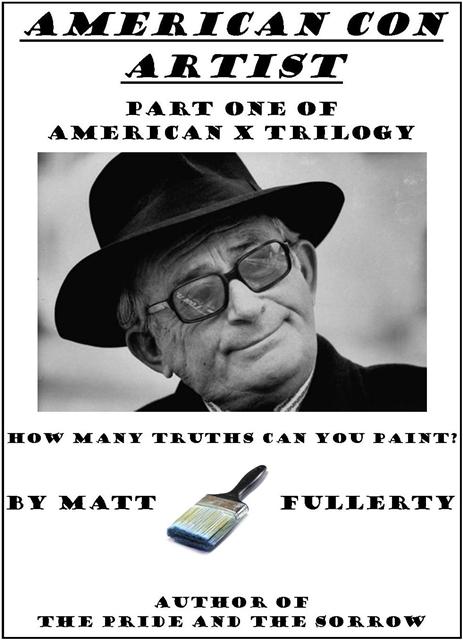
My novel about painting, criminality, and the greatest art forger of the twentieth century!

My novel about painting, criminality, and the greatest art forger of the twentieth century!
Please click the cover!

My novel about London, murder, mayhem, and a female killer!

My novel about London, murder, mayhem, and a female killer!
Please click the cover!

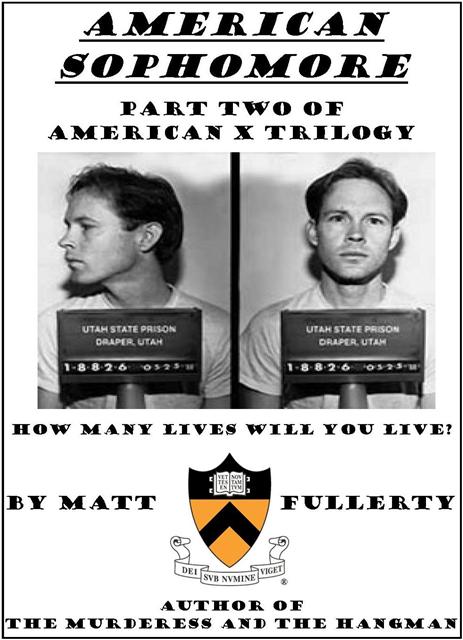
My novel about running, Princeton University, and a conman who lost it all!

My novel about running, Princeton University, and a conman who lost it all!
Please click the cover!

My novel about running, Princeton University, and a conman who lost it all!

My novel about running, Princeton University, and a conman who lost it all!
Please click the cover!

My novel about love, betrayal and chess in New Orleans

My novel about love, betrayal and chess in New Orleans
Please click the book!

My semi-autobiographical novel about a very British education and becoming an American!

My semi-autobiographical novel about a very British education and becoming an American!
Please click the cover!

My novel about London, murder, mayhem, and a female killer!

My novel about London, murder, mayhem, and a female killer!
Please click the cover!