Having recently received my Green Card, I particularly enjoyed this song. At long last, I got to see Bruce Springsteen and the E Street Band in Washington, DC last Monday. "We'll make our home in the American Land"!
Enjoy!


 Until the nineteenth century there was a special Church of England service for this commemoration in the Book of Common Prayer. Guy Fawkes Day became a public holiday in 1606 when it was proclaimed by an Act of Parliament. In commemoration of the Gunpowder Plot on this day in 1605, when Guy Fawkes and his comrades tried to blow up King James I and the whole English Parliament, English people still burn a 'guy' in effigy.


The master of minimal storytelling loathed experimentation in fiction, but his hated 'licence to be silly' is vital to the life of short stories
Conventional reading ... Raymond Carver in 1984. Photograph: Bob Adelman/Corbis
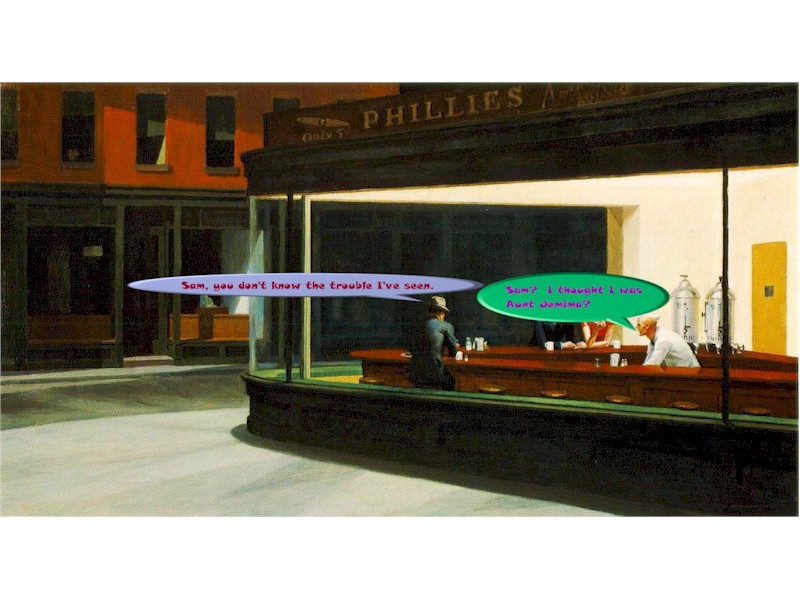
Speaking at the Manchester Literary Festival, James Lasdun – probably the closest in recent years this country has come to a genuinely great practitioner of the short story – expressed dismay at the publication of Beginners; the original, more expansive version of Raymond Carver's minimalist masterpiece What We Talk About When We Talk About Love. Unlike Blake Morrison, who saw it as a revelation, Lasdun suggested that this was muddying Carver's great legacy. Reading the two volumes side by side, I found it hard not to agree with Lasdun; in all too many cases it's like looking at a Edward Hopper painting to which someone has added graphic-novel-style thought bubbles.
The rights and wrongs of publishing these stories before editor Gordon Lish took a scalpel to them can be debated, but there's no doubt that this publication has once again put Carver in the limelight – if he'd ever really been in the shadows. Carver is, I suppose, the ultimate modern short story writer. His fiction has a resonance that is attractive to both readers and writers. How he achieves this mesmerising effect is set out in his essay "On Writing", published in the same year as his much shortened version of Beginners.
"On Writing" is Carver's vision for fiction; his blue-collar blueprint. It's a fine and persuasive piece, full of insight into the creative process and the obligations of the writer. There are moments of personal confession, coupled with elegantly quotable sentences – "Get in, get out. Don't linger" for example. But as with his very best writing, there is a darker, less palatable truth lurking within its pages.
The lessons that Carver provides are second hand ones, derived from creative writing teachers and authors he admires. This is no criticism when you consider his mentors are Chekhov, Isak Dinesen, Isaac Babel and Flannery O'Connor. The advice, it seems to me, is well chosen. Trusting your instincts, while also being open to new discoveries; to write a little each day without despair; to revel in the mysteries of revelations.
All good – if slightly non-specific – advice, told in a considered, conversational tone. But then, Carver hits you with a curve ball. "No tricks." He says. "Period. I hate tricks." Experimentation, as Carver goes on to say, is too often "a licence to be careless, silly or imitative." Which in amongst the homilies and creative class wisdom changes his essay from a fascinating insight into his working practices, into a manifesto. A sort of write-in-a-day-the-Raymond-Carver-way.
I like tricks. I like formal invention; not for its own sake, but in the sense that it gives the reader something to think about, to look at from another angle. To be told that this is wrong, somehow mistreating the reader, made me suddenly quite angry. What about Barthelme, I thought, Sterne, BS Johnson, Angela Carter? And what about perhaps this year's most feted story collection, David Vann's Legend of a Suicide?
Vann's book seems initially to conform to all Carver's edicts. It is polished, elegant and beautifully written; fitting into an American lineage that encompasses Ernest Hemingway, Cormac McCarthy, Richard Ford and Tobias Wolff. But then halfway through, Vann does something transformative, something that you simply don't see coming and nothing is the same again. You could call this a "trick", but to me it's something approaching genius.
When people talk negatively about creative writing classes and the kind of fiction they produce, it's precisely Carver's prejudice against invention and tricks to which they are usually alluding. New voices are stifled behind rules and conventions, like Carver's, that should be challenged and bent and railed against. Innovation – as Vann and his fellow countryman Wells Tower prove – is what keeps the short form vital and alive, despite its status as a commercial pariah for publishers.
For all Carver's disdain for experimentation, even Donald Barthelme and BS Johnson would look on admiringly at the effect of Beginners. How much would they have enjoyed readers holding two versions of the same stories, reading them side by side? And how ironic that a writer who said that he "ran for cover" at the sight of a trick, has now become the newest trick in town.
--
Stuart Evers
Wednesday 28 October 2009
The Guardian
(c) Guardian News and Media Limited. 2009
cropped.jpg)
.jpg)
cropped.jpg)
cropped.jpg)
2.jpg)
Cropped.jpg)
cropped.jpg)

4.jpg)







 Posts
All Comments
Posts
All Comments