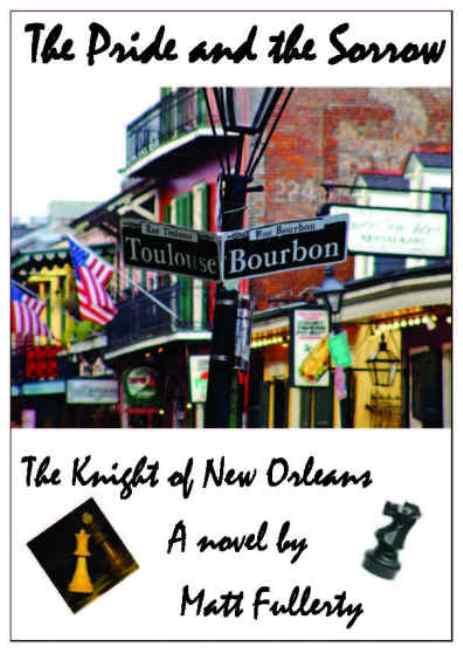
My novel about love, betrayal and chess in New Orleans: The Pride and the Sorrow

Thursday, January 28, 2010

J D Salinger dies, aged 91

Catcher in the Rye author JD Salinger has died of natural causes at his home in New Hampshire.

JD Salinger, who shocked one generation and inspired another with a classic novel of teenage rebellion, has died in New Hampshire at the age of 91.

Salinger, who shied away from publicity and did not publish an original work during the last 45 years of his life, was the creator of Holden Caulfield, the delinquent, alienated anti-hero of The Catcher in the Rye, which became required reading for generations of teenagers after its publication in 1951.

But in recent years its relevance to modern youth came into question and his reputation was tarnished by two accounts, one by a former lover and the other by one of Salinger's daughters, who painted him as a controlling and unpleasant eccentric.

The Catcher in the Rye was praised by the New York Times on publication as "an unusually brilliant first novel". But while an instant hit with many teenagers who related to its tale of adolescent angst and adult hypocrisy, it was met with alarm in other quarters. Some school boards made it required reading. Others banned it amid protests from parents over swearing – including the frequent use of "goddam" and, more rarely, "fuck" – as well as the bad example they believed Holden set.

Four years after its publication Salinger expressed disappointment that the book, which he acknowledged was based on his own upbringing, had met with some hostility.

"I'm aware that a number of my friends will be saddened, or shocked, or shocked-saddened, over some of the chapters of The Catcher in the Rye. Some of my best friends are children. In fact all of my best friends are children," he wrote in 20th Century Authors. "It's almost unbearable to me to realise that my book will be kept on a shelf out of their reach."

John Lennon's murderer, Mark Chapman, cited The Catcher in the Rye as an inspiration for the killing in 1980.

Salinger published other books, including the well received Nine Stories and Franny and Zooey, before he became an almost total recluse. His last published work – Hapworth 16, 1928 – was printed in The New Yorker in 1965.

Ten years ago it was revealed that Salinger had a secret cache of about 15 novels that had never been published. In his last interview, in 1980, he said that he only wrote for himself.

In 1986 Salinger won an injunction against the publication of a collection of his letters. During the case, which went all the way to the US supreme court, he was asked what he had been working on for the previous 20 years.

"Just a work of fiction," Salinger said in a deposition. "That's all. That's the only description I can really give it ... It's almost impossible to define. I work with characters, and as they develop I just go on from there."

Salinger was born in New York City on New Year's Day 1919. His father, of Polish Jewish origin, became wealthy importing cheese and meat. His mother posed as Jewish and he did not find out that she was not until after his bar mitzvah.

Salinger had his own troubled history in various schools until he was dispatched to Valley Forge military academy at the age of 15. There he began writing at night using a torch under his bed covers and published his first story in a fiction magazine in 1940.

He submitted a number of stories to the New Yorker that were rejected, including one called I Went to School with Adolf Hitler. But the magazine did accept a later story about a disaffected teenager called Holden Caulfield, the first time the character appeared.

In 1942 Salinger was conscripted to fight in the second world war where he took part in the Normandy landings. He married a German woman while serving with the occupation forces after the defeat of Hitler. The couple moved to America but the marriage soon fell apart. Salinger took up Zen Buddhism.

He found fame disagreeable and the year after the publication of his most famous novel he left New York city for the town of Cornish, New Hampshire. There he remarried, to Claire Douglas, had two children, and then divorced in 1967.

Periodically the spotlight shone on Salinger again.

In 1998 the writer Joyce Maynard published a memoir in which she wrote unflatteringly about an eight-month affair with Salinger in which she described his controlling personality. Two years later one of Salinger's daughters, Margaret, wrote of her father as a recluse who drank his own urine and spoke in tongues.

Salinger was thrust into public view one last time a year ago when he sued to block the publication of an unauthorised sequel to The Catcher in the Rye called 60 Years Later. The writer, John David California, imagined Holden in his 70s.

--

Chris McGreal in Washington, The Guardian, Thursday 28 January


The Death of the Slush Pile?


Even in the web era, getting through the door is tougher than ever...

In 1991, a book editor at Random House pulled from the heaps of unsolicited manuscripts a novel about a murder that roils a Baltimore suburb. Written by a first-time author and mother named Mary Cahill, "Carpool" was published to fanfare. Ms. Cahill was interviewed on the "Today" show. "Carpool" was a best seller.

That was the last time Random House, the largest publisher in the U.S., remembers publishing anything found in a slush pile. Today, Random House and most of its major counterparts refuse to accept unsolicited material.

JUDITH GUEST

[slush] Associated Press

When Minnesota mom Ms. Guest sent out "Ordinary People" in 1975, it was refused by the first publisher. Another wrote, "While the book has some satiric bite, overall the level of writing does not sustain interest and we will have to decline it." It became a best seller and a movie.

Getting plucked from the slush pile was always a long shot—in large part, editors and Hollywood development executives say, because most unsolicited material has gone unsolicited for good reason. But it did happen for some: Philip Roth, Anne Frank, Judith Guest. And so to legions of would-be novelists, journalists and screenwriters—not to mention "D-girls" and "manuscripts girls" from Hollywood to New York who held the hope that finding a gem might catapult them from entry level to expense account—the slush pile represented The Dream.

Now, slush is dead, or close to extinction. Film and television producers won't read anything not certified by an agent because producers are afraid of being accused of stealing ideas and material. Most book publishers have stopped accepting book proposals that are not submitted by agents. Magazines say they can scarcely afford the manpower to cull through the piles looking for the Next Big Thing.

It wasn't supposed to be this way. The Web was supposed to be a great democratizer of media. Anyone with a Flip and Final Cut Pro could be a filmmaker; anyone with a blog a memoirist. But rather than empowering unknown artists, the Web is often considered by talent-seeking executives to be an unnavigable morass.

It used to be that you could bang out a screenplay on your typewriter, then mail it in to a studio with a self-addressed stamped envelope and a prayer. Studios already were reluctant to read because of plagiarism concerns, but they became even more skittish in 1990 when humorist Art Buchwald sued Paramount, alleging that the studio stole an idea from him and turned it into the Eddie Murphy vehicle, "Coming to America." (Mr. Buchwald received an undisclosed settlement from Paramount.)

STEPHENIE MEYER

dpa/Corbis

Ms. Meyer sent 15 query letters about her teenage-vampire saga. She got nearly 10 rejection letters; one even arrived after she signed with an agent and received a three-book deal from Little, Brown. She doesn't need to send out query letters anymore.

"It does create an incredibly difficult Catch-22 on both sides, particularly for new writers wanting to get their work seen," says Hannah Minghella, president of production for Sony Pictures.

Fending off plagiarism lawsuits has become an increasing headache for publishers and studios. "It's become the cultural version of malpractice," says Kurt Andersen, the novelist and host of public radio's "Studio 360."

Some producers make it easy: They just refuse to deal with new writers at all. Mike Clements, president of Good Humor, the production company founded by Tom Werner ("The Cosby Show"), has a personal policy against reading any sample or script that is not sent to him by an agent. "I make the occasional exception for a friend, or for my aunt," he says. "I just make them sign a release first."

[slush] Lisa Haney

Staying Out of the Slush Pile: Do's and Don'ts

• Find an agent who's hungry—a nd "monetize." "Anyone who wants to break in should read Variety and Hollywood Reporter and see which assistants have just been promoted to agents…anyone can teach a three-act structure. What I want students to get in the mind set of is 'How do we write something with the purpose of monetizing it?'" —Ryan Saul, literary agent, APA, and screenwriting instructor

• Don't be a barista waiting for someone to stumble upon your genius. "Our editors travel, they get around. They look at writer's conferences, at MFA programs. They look at magazine articles and at blogs. That's what editors do, they sniff things out from so many different sources." —Carol Schneider, Random House Publishing Group

• Find another way in Slush pile finds "are the rare exception that give people hope. If we found one writer a year that sent things in randomly, that would be a lot…agents are necessary gatekeepers but it's nice if there is an alternative entry…there are subversive ways to get your stuff read—you just have to be dedicated. A writer I know wasn't able to get treatments read so he started rendering them as comic books." —David Granger, editor in chief, Esquire

• Contests! "I'm always wary to recommend to writers that they go to competitions too much because there are fees and they can end up spending a lot of money. But the ones that do get industry attention are really fantastic opportunities to network and to make important relationships." —Hannah Minghella, president of production, Sony Animation Studios, formerly in development at Miramax

• And buck up. In 1957, Tom Wolfe interviewed James Michener, a former slush pile reader and the author of "Tales of the South Pacific." Mr. Wolfe asked him if he had worried, upon submitting the Pulitzer Prize-winning tome to publishers, about competition lurking in the slush piles. "If you've ever read a slush pile," said Mr. Michener, "you'd know I had nothing to worry about," Mr. Wolfe says. "He knew how much garbage there was out there."

As writers try to find an agent—a feat harder than ever to accomplish in the wake of agency consolidations and layoffs—the slush pile has been transferred from the floor of the editor's office to the attaché cases of representatives who can broker introductions to publishing, TV and film executives. The result is a shift in taste-making power onto such agents, managers and attorneys. Theirs are now often the first eyes to make a call on what material will land on bookshelves, television sets and movie screen.

Still, discoveries do happen at agencies, including the biggest publishing franchise since "Harry Potter"—even though it basically took a mistake to come together. In 2003, an unknown writer named Stephenie Meyer sent a letter to the Writers House agency asking if someone might be interested in reading a 130,000-word manuscript about teenage vampires. The letter should have been thrown out: an assistant whose job, in part, was to weed through the more than 100 such letters each month, didn't realize that agents mostly expected young adult fiction to weigh in at 40,000 to 60,000 words. She contacted Ms. Meyer and ultimately asked that she send her manuscript.

The manuscript was passed on to an agent, Jodi Reamer. She liked what she read, a novel called "Twilight." She signed Ms. Meyer, and sold the book to Little, Brown. The most recent sequel in the series, "Breaking Dawn," sold 1.3 million copies the day it went on sale in August 2008. The latest film grossed more than $288 million in the U.S.

At William Morris Endeavor Entertainment, Adriana Alberghetti only reads scripts sent to her by producers, managers and lawyers whose taste she knows and trusts. The agent says she receives 30 unsolicited e-mails a day from writers and people she doesn't know who are pushing unknown writers, and she hits "delete" without opening. These days, she is taking on few "baby writers," she says, adding that risks she would have taken five years ago she won't today. "I'll take very few shots on a new voice. It's tough out there right now," she says.

Book publishers say it is now too expensive to pay employees to read slush that rarely is worthy of publication. At Simon & Schuster, an automated telephone greeting instructs aspiring writers: "Simon & Schuster requires submissions to come to us via a literary agent due to the large volume of submissions we receive each day. Agents are listed in 'Literary Marketplace,' a reference work published by R.R. Bowker that can be found in most libraries." Company spokesman Adam Rothberg says the death of the publisher's slush pile accelerated after the terror attacks of 9/11 by fear of anthrax in the mail room.

COVER_BOTT

A primary aim of the slush pile used to be to discover unpublished voices. But today, writing talent isn't necessarily enough. It helps to have a big-media affiliation, or be effective on TV. "We are being more selective in taking on clients because the publishers are demanding much more from the authors than ever before," says Laurence J. Kirshbaum, former CEO of Time Warner Book Group and now an agent. "From a publisher's standpoint, the marketing considerations, especially on non-fiction, now often outweigh the editorial ones."

Getting an opportunity in Hollywood as a writer once required little more than affiliation with elite institutions like the Harvard Lampoon, the humor magazine which spawned writers for "The Simpsons" and a host of others. The Web was supposed to dismantle such barriers. And to be sure, the Web has provided a path for some writers who use it well.

Scott Belsky, a 29-year-old Web entrepreneur whose sites include "The 99 Percent," wanted to write a book on how to succeed in the creative industries. To secure representation, he approached agents with data on his Web traffic, samples of reader comments posted on the site, and the number of times various posts had been blogged about, tweeted and retweeted on social-networking site Twitter. This data convinced Jim Levine at Levine Greenberg Literary Agency to take on Mr. Belsky as a client. Mr. Levine used the information to land him a book deal. "Making Ideas Happen" will be published in April by Portfolio, a division of Penguin Group.

ANNE FRANK

Anne Frank Fonds/Getty Images

"Diary of a Young Girl" had been published in Holland and was headed to France. But Doubleday's Paris office had marked it for rejection. Judith Jones, then a "girl Friday," disobeyed her boss and alerted Doubleday's New York editors, and the English-language edition came out in 1952.

"These days, you need to deliver not just the manuscript but the audience," says Mr. Levine. "More and more, the mantra in publishing is 'Ask not what your publisher can do for you, ask what you can do for your publisher.'"

But relationships still trump everything. Consider the path of one television series, "Sons of Tucson," set to debut on Fox in March. The show, a sitcom about kids who hire a ne'er-do-well to stand in as their father after their real dad is sent to prison, was created and co-written by neophytes—a rare event.

Tommy Dewey and Greg Bratman worked hard to get their big break, but because Mr. Dewey had done some acting, he was able to sign with a manager. The manager introduced them to a producer, Harvey Myman, who helped them develop a pilot script and got them a meeting with Fox, which ordered a pilot, then the series.

"Sons of Tucson" shows that unknowns can still make it—if they make some connections. "You really do rely on other people to be the arbiters of what may and may not work," says Marcus Wiley, a Fox TV executive. "If I was an agent submitting to an executive, I'm going to be calling that executive next week for something else. So the chances of me claiming plagiarism are slim," he adds. "This keeps both sides honest."

PHILIP ROTH

[slush] Associated Press

In 1958, Mr. Roth was an unknown who had barely been published when a short story called "The Conversion of the Jews" was plucked out of a heap at the Paris Review—by Rose Styron, wife of William. The next year it was published as part of "Goodbye, Columbus."

Despite the refrain that most everything sent to the slush pile is garbage, publishing executives confess to a nagging insecurity of missing something big. "Harry Potter" was submitted to 12 publishers (by an agent), all of whom rejected it. A year later, Bloomsbury published it in the U.K.

In 2008. HarperCollins launched Authonomy.com, a Web slush pile. Writers can upload their manuscripts, readers vote for their favorites, and HarperCollins editors read the five highest-rated manuscripts each month. About 10,000 manuscripts have been loaded so far and HarperCollins has bought four.

The first, "The Reaper," came out in July and sold moderately well. Last November, the publisher released another Authonomy offering, a young adult book called "Fairytale of New York," which has sold over 100,000 copies and is a best seller in Britain. HarperCollins also launched a similar platform for teen writers called "InkPop."

One slush stalwart—the Paris Review— has college interns and graduate students in the magazine's Tribeca loft-office read the 1,000 unsolicited works submitted each month. Each short story is read by at least two people. If one likes it and the other doesn't, it is read by a third. Any submission that receives two "Ps" for "pass" as opposed to "R" for "reject" is read by an editor.

"We take the democratic ideal represented by the slush pile seriously," says managing editor Caitlin Roper.

The literary journal publishes one piece from the slush pile each year. That leaves each unsolicited submission a .008% chance of rising to the top of the pile.

--

Write to Katherine Rosman at katherine.rosman@wsj.com


Wednesday, January 27, 2010

EL Doctorow: 'I don't have a style, but the books do'

EL Doctorow: 'I found myself writing this line: I’m Homer, the blind brother – I had the voice; I was off.'

The author of Ragtime, The Book of Daniel and Homer and Langley talks to Sarah Crown.

On a quiet Harlem backstreet at the end of a row of stately brownstones is a grassed-over sliver of land, home to a handful of plane trees, a couple of flowertubs and a garden bench or two. A sign on the railings gives its name as the Collyer Brothers Park. It stands on the lot of what was once the home of Homer and Langley ­Collyer, well-born, educated, affluent brothers who slowly but surely turned their backs on polite society, shuttering their windows and giving themselves over to a shadow-life of squirrelling. After their deaths in 1947 (Langley under a landslide of rubbish; Homer, blind and paralysed, from starvation), their house was broken open: the 130 tons of junk discovered within saw them posthumously ordained as America's most notorious pack-rats.

It's a term of which EL Doctorow ­disapproves. His latest novel, Homer and Langley, takes the brothers' legend and moulds it, shifting their house into the heart of Manhattan and allotting them an extra 30 years' life; he prefers, he says, to think of them as "aggregators. Sort of like Google". The verminous association is symptomatic, he believes, of the way in which the brothers' characters have been traduced over the years; something that's still going on to this day. It was the spectacle of their reputation being hauled over the coals once more that led to their story, which had simmered in his head for years, offering itself as a subject. "My books start almost before I realise it," he says, leaning forward in the study chair of his unfussy mid-town apartment. "Once in a while, some accident causes an idea to rise to the surface and say: 'now'. I've known about the brothers for years, of course; I wasn't the only teenager of the time whose mother looked into his room and said 'My God, it's the Collyers'!' But a few years back, I saw a piece in the New York Times saying locals were objecting to having the park named after them. I thought, they're still disturbing people, 50 years after they're dead! They've become folklore. This is something to think about."

Doctorow didn't undertake any research for the book, preferring to fish back through his memories of the Collyers' story and expand on them, drawing the mythic elements out. "I didn't want to know, terribly, what the clinical details were," he says. "I found myself writing this line: 'I'm Homer, the blind brother'" – the novel's plangent opening sentence. "I had the voice; I was off. And I learned as I went along. I realised at a certain point that I was writing a kind of road novel, with these two guys talking to each other as characters on the road do, not just for the length of a trip, but for the whole of their lives."

The analogy is a potent one. In the novel, Doctorow sets the Collyers off down two parallel paths. One waltzes them through the American century, where they meet representatives of its tribes (immigrants and refugees; veterans, jazz musicians and mafia hoods; hippies and bureaucrats) and take part in its seminal moments – selling off copper guttering for the war effort, painting bas-relief portraits of the moon landing. The other passes through their house, which comes to embody a continent-in-miniature on which the brothers enact a symbolic colonisation. Airy and open at first, it slowly silts up with the detritus of US consumerism ("artifacts", as Homer puts it, "from our American life") and, in the form of the newspapers which Langley collects daily, the nation's stories.

But the analogy has a wider application. The pliancy of the road novel, its easy subjectivity and whimsical, intuitive relationships with the events it encounters, stands as a metaphor for Doctorow's own flexible association with real-world history. Perhaps surprisingly, given the New York ­setting of so many of his novels, he says he lacks a geographical pole. "New York isn't a setting to me: it's life, it's volatile, it changes from generation to generation. It didn't confer a literary identity on me the way, say, the Mississippi did Faulkner. With Ragtime" – his novel of the jazz era – "I stumbled on the idea that a period of time was as good a constructive principle as a sense of place." But while figures from his country's past rise up as landmarks in his novels, they're portrayed either provisionally or downright fancifully. Abraham Lincoln in his civil-war epic The March, Jewish mobster Dutch Schultz in Billy Bathgate (which snagged him the National Book Critics Circle award and the PEN/Faulkner award), Harry Houdini in Ragtime – all make their appearances entirely in the service of the story. He's been criticised for this free-and-easy treatment of historical figures by, among others, John Updike, who said of Ragtime that it "smacked of playing with helpless dead puppets". But Doctorow is unapologetic. Indeed, it's hard to see how he could repent of an approach which led directly to the intoxicating unreliability of his best-known work, The Book of Daniel. His barely fictionalised account of the trial and execution of Julius and Ethel Rosenberg (Paul and Rochelle Isaacson, in Doctorow's version), told in a furious crackle by their son, Daniel, located him in the pantheon of great arbiters of 20th-century American life alongside the likes of Philip Roth and Saul Bellow (although he has yet to achieve the same recognition). The novel caused the cultural critic Fredric Jameson to label him "the epic poet of the disappearance of the American radical past", and saw Barack Obama name him as his favourite author, after Shakespeare. This technical fluidity extends from the quirks of his characters into the pattern of his prose; he is master of the run-on sentence. "They're one of my sins. I like commas. I detest semi-colons – I don't think they belong in a story. And I gave up quotation marks long ago. I found I didn't need them, they were fly-specks on the page. If you're doing it right," he says, "the reader will know who's talking."

Edgar Lawrence Doctorow was born in the Bronx in 1931. His parents, children of Russian-Jewish immigrants, nailed their new world colours to the mast by naming him after his father's favourite American author, Edgar ­Allan Poe. "It wasn't until just before my mother died that I asked her about it," he grins. "I said 'Did you and dad realise you named me after an alcoholic, drug-addicted, delusional paranoiac with strong necrophiliac tendencies?' She said 'Edgar, that's not funny.'" His decision to publish under his initials wasn't a rejection of the name, but was rather his own attempt to follow in the footsteps of the authors he admired. "DH Lawrence, WH Auden, TS Eliot," he offers. "Erm . . . W Shakespeare. F Dostoevsky . . . "

Although his first years were played out against the backdrop of the US's great depression, Doctorow recalls his childhood as "a good time. There was no money, but the house was filled with music and books." His father owned a music shop on Sixth Avenue (it cameos in Homer and Langley, when Langley finds there "a virtual musicologist, with recordings of swing orchestras and crooners and songstresses that no other store had"). And the young Doctorow haunted the public library and read indisciminately, "everything from comic books to Dostoevsky. I remember seeing The Idiot on the library shelf and thinking, that's for me." Education came via the Bronx High School of Science, "theoretically for children who were gifted at science and math. I fled down the hall to the literary magazine, who were my first publishers: a piece of Kafka-inspired animalogical self-defamation called 'The Beetle'. They later put it on their website, which I thought was a cruel thing to do."

From there, he went to Kenyon College in Ohio. "People come out of the mid-west and go to the Ivy League. I kind of reversed the direction." It turned out to have been a smart choice; Doctorow studied under the poet and critic John Crowe Ransom, and became heavily involved in the theatre, where he stepped out alongside Paul Newman, a senior during Doctorow's freshman year. "I began to get some decent roles after he left." It was during his English drama MA at Columbia that he met his wife, Helen. "My thesis was supposed to be a play, but I never wrote it; I was drafted into the army." On his return, he rattled through a series of jobs before landing work as a reader for a motion picture company. It was, he believes, a useful apprenticeship. "And there were moments of real excitement: the company had optioned Saul Bellow's Henderson the Rain King while he was writing it, and I got to read about 150 pages before it was published. I urged them to buy it, but of course they didn't."

Doctorow's stint on the fringes of the film industry coincided with the western's stranglehold on Hollywood, a circumstance which inadvertently inspired his first novel, Welcome to Hard Times. "It was making me ill, reading one lousy western after another," he remembers. "So I wrote a parody in a fit of rage, showed it to the story editor, and he said: 'This is good, you want to make a novel out of this.' I crossed out the title, wrote 'Chapter One', and went from there." The novel, published when he was 28, edged from satire into serious enterprise while he was writing it. "I got interested in the idea of making something real from a disreputable genre. But it didn't teach me much about writing, or myself."

His second novel, Big As Life, a now-out-of-print foray into science fiction which he calls "the worst thing I've ever done", came out while he was simultaneously pursuing a hopscotch career through publishing. "I bounced from being a reader to working for New American Library – in those days a worthy mass-market publisher – and from there to the Dial Press, where I was made editor-in-chief." His roster included Norman Mailer and James Baldwin; while Baldwin was a highwire act, turning in manuscripts then absconding to Paris to avoid his copy editors, Mailer was a dream to edit, "not the bombastic public figure at all. He listened, he was courteous." It wasn't until later that they had their inevitable fight. "Mailer was president of International PEN, and during Reagan's presidency, he secretly invited the secretary of state, George Schultz, to a conference. I found out, and knocked out an op-ed piece protesting the move, which seemed to me to be an insult." They didn't speak again until Mailer got in touch to say he admired Billy Bathgate. At that point, Doctorow chuckles, "there was a rapprochement".

He was proud of his work at Dial, but when he began The Book of Daniel, something had to give. "It was a book that demanded my complete attention. When I was about a third of the way through, I had lunch with the literary agent Don Congden and mentioned that I was unhappy. He knew of a visiting post at the University of California, Irvine, and asked if I would be ­interested. So my wife and I sat down and consulted the I Ching. It was the 60s! It said: 'You will cross a great water'. And Helen said: 'That's the ­Mississippi. Let's go.'"

The idea for the novel came to Doctorow in the late 60s, when Viet­nam and the civil rights movement had the country in uproar. "Out of the ­campuses came something called the new left, and I began to wonder how it compared with the old left of the 30s. It occured to me that I could tell the story of this country's life over a 30-year period by dealing with its dissidents. And I realised that the Rosenbergs could be the fulcrum. Everything snapped together."

The pieces were in place, but the story wouldn't quite come – until a moment of genesis as mythic, in its way, as the one Doctorow was trying to conjure. "I was writing in the third person, and it wasn't working. I had this terrible moment when I threw 150 pages across the room and said 'If I can make this story dull, I don't have any business writing.' So I put a new sheet in the typewriter and began to write almost in mockery of my own ambition. It turned out to be page one. Having Daniel tell the story was a way of being intimate with everything that happened without understanding it. That was my position as the writer."

Though Doctorow fans may ­champion the generosity of his semi-autobiographical novel World's Fair, or Ragtime's wordy antics, The Book of Daniel is now widely held up as his greatest work. Yet since it emerged that Julius Rosenberg, in all probability, did spy for the USSR, Doctorow has been asked over and over: would he write the same book again? Of course, he says. ­"People who haven't read it assume it's a simple-minded defence of the Rosenbergs. It's not. The book doesn't draw conclusions about their guilt: it wasn't about them, it was about what happened to them. It was about the state of this country's mind." Is the book's anger Daniel's, or his? He ponders the question. "Suffering isn't a moral ­endowment. People don't always do well under duress, and it seemed to me to be truer to a fellow in that situation to make him angry. That's why I did it. But that's the ­constant question: how much of the book is you?"

It's a question anyone reading Doctorow eventually finds themselves asking. Travel through his novels and you begin to see that certain landscapes are repeated, and a repertory company of stock characters – the charming, impractical father; the senile grandmother; the mother who is capable, handsome, disenchanted – emerges. "That never occured to me," Doctorow laughs. "I guess there is that rough archetype of the parental relationship, but I was steeped in the belief that the author's life is a distraction: the test of a book's quality is not if it reflects my life, but if it reflects yours." World's Fair, his sweetest, straightest story of a young boy, Edgar, growing up in the Bronx "began autobiographically, but even when you use material from your own life explicitly, you still have to make the composition."

Though characters resurface, stylistically Doctorow is a nomad, leaping from the formal prose of his 19th-century New York novel The Waterworks, to the jazz ­cadences of Ragtime, to Homer Collyer's wry, melancholy reflections. "I don't have a style, but the books do. Each demands its own method of presentation, and I like that. My theory about why Hemingway killed himself is that he heard his own voice; that he reached the point where he couldn't write without feeling he was repeating himself. That's the worst thing that can happen to a writer. A new reader shouldn't be able to find you in your work, though someone who's read more may begin to."

--

Sarah Crown, The Guardian, Saturday 23 January 2010


Image of the Week #1


Tuesday, January 26, 2010

"Sex" definition prompts dictionary ban in US schools

A parent's complaint over a 'sexually graphic' definition has seen dictionaries removed from southern Californian schools.

Dictionaries have been removed from classrooms in southern California schools after a parent complained about a child reading the definition for "oral sex".

Merriam Webster's 10th edition, which has been used for the past few years in fourth and fifth grade classrooms (for children aged nine to 10) in Menifee Union school district, has been pulled from shelves over fears that the "sexually graphic" entry is "just not age appropriate", according to the area's local paper.

The dictionary's online definition of the term is "oral stimulation of the genitals". "It's hard to sit and read the dictionary, but we'll be looking to find other things of a graphic nature," district spokeswoman Betti Cadmus told the paper.

While some parents have praised the move – "[it's] a prestigious dictionary that's used in the Riverside County spelling bee, but I also imagine there are words in there of concern," said Randy Freeman – others have raised concerns. "It is not such a bad thing for a kid to have the wherewithal to go and look up a word he may have even heard on the playground," father Jason Rogers told local press. "You have to draw the line somewhere. What are they going to do next, pull encyclopaedias because they list parts of the human anatomy like the penis and vagina?"

A panel is now reviewing whether the Menifee ban will be made permanent. The Merriam Webster dictionary joins an illustrious set of books that have been banned or challenged in the US, including Nobel prize winner Toni Morrison's Song of Solomon, which last year was suspended from and then reinstated to the curriculum at a Michigan school after complaints from parents about its coverage of graphic sex and violence, and titles by Khaled Hosseini and Philip Pullman, included in the American Library Association's list of books that inspired most complaints last year.

--

Alison Flood, The Guardian, Monday 25 January


My novel about painting, criminality, and the greatest art forger of the twentieth century!

My novel about painting, criminality, and the greatest art forger of the twentieth century!
Please click the cover!

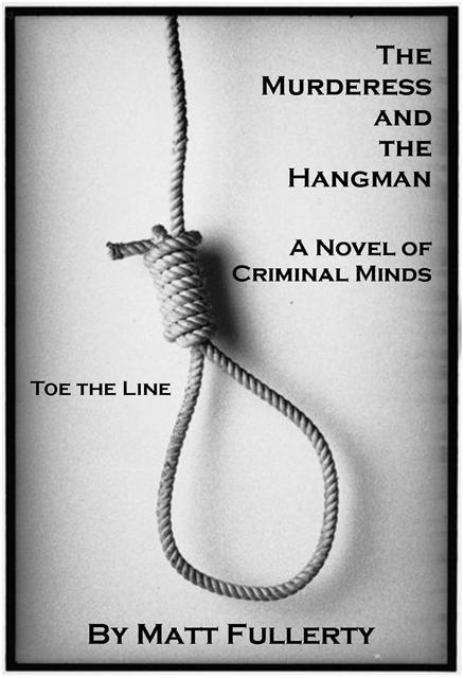
My novel about London, murder, mayhem, and a female killer!

My novel about London, murder, mayhem, and a female killer!
Please click the cover!

My novel about running, Princeton University, and a conman who lost it all!

My novel about running, Princeton University, and a conman who lost it all!
Please click the cover!

My novel about running, Princeton University, and a conman who lost it all!

My novel about running, Princeton University, and a conman who lost it all!
Please click the cover!

My novel about love, betrayal and chess in New Orleans

My novel about love, betrayal and chess in New Orleans
Please click the book!

My semi-autobiographical novel about a very British education and becoming an American!

My semi-autobiographical novel about a very British education and becoming an American!
Please click the cover!

My novel about London, murder, mayhem, and a female killer!

My novel about London, murder, mayhem, and a female killer!
Please click the cover!