


To distinguish it from the novel, I've called the screenplay The Knight of New Orleans. It's currently with the Film and TV agent Meg Davis, Director of MLA Literary Agents in London.
I also took the move of registering The Knight of New Orleans with the Writer's Guild of America, East as proof of copyright. Copyright is immediately assigned to the originator at the point of writing, so registering any work (or mailing it to yourself in a sealed post-stamped envelope) has to be a wise move.
I look forward to The Knight of New Orleans being sent out in 2009!
 I realized a long time ago that I find it very difficult to actually sit down and write. Do writing of any kind. I even despair of e-mails. I used to write long, flowing e-mails to entertain friends, but that was when e-mail was new. E-mail is not new.
The hardest thing is to sit down and write my novel - actually put words on the page. I am sure this is not uncommon So to counter this failing, I realized that setting the bar low was the answer. But not too low. Basically I know I need to write every day, 5 days a week. I am not crazy so I don't feel bad at taking the entire weekend off, so long as I work my 5 days. My approach is to get the writing out of the way as soon as possible. For this reason I start at 8 a.m. And I realized that 2 hours is my maximum capacity at one sitting - this is based on the idea that if the writing is going well, I can actually drift into it for 20-30 minute spells without noticing the time. These are the best times. On that basis, I can doze off a little after a difficult start to discover there is 45 minutes or so remaining in my two hour slot. Which I struggle through to the end.
The next part of my self-imposed plan is to take a break, neither too long nor too short, so it is a break, but before I realize it, I am basically back at it. After much experimentation - involving starting too soon, or usually, drifting off somewhere for the rest of the day/week - I've realized the perfect time is 30 minutes. This allows me to do something - make tea, move something around (including myself), check what's in the fridge, but more often than not make tea and walk around, and then PING! the desk duty calls!
So all in all, I write 4 hours a day and stop. 8am-10am, and 10.30am - 12.30pm. The advantage of this schedule is that you get everything else done in the afternoon, rather than fretting around thinking about writing!
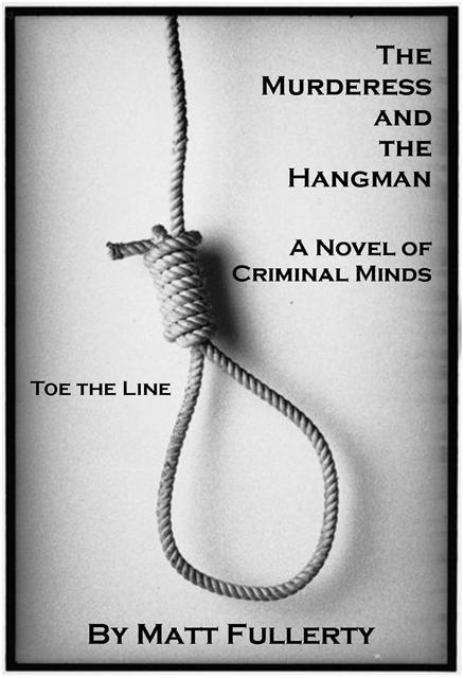
.jpg) Bookhabit.com is pleased to announce the winner of the inaugural Bookhabit Unpublished Competition is Matt Fullerty's The Pride and the Sorrow. Matt receives a US$5000 prize and is "thrilled" about winning the first Bookhabit competition. We will be posting an interview with Matt on Bookhabit.com shortly. Congratulations from Bookhabit! You can see full details with an endorsement of the novel at http://www.bookhabit.com/newsdetail.php?nid=48
Bookhabit.com is pleased to announce the winner of the inaugural Bookhabit Unpublished Competition is Matt Fullerty's The Pride and the Sorrow. Matt receives a US$5000 prize and is "thrilled" about winning the first Bookhabit competition. We will be posting an interview with Matt on Bookhabit.com shortly. Congratulations from Bookhabit! You can see full details with an endorsement of the novel at http://www.bookhabit.com/newsdetail.php?nid=48
 This is John McGahern, a much respected Irish novelist who passed away in 2006. However, his archives are held at the National University of Ireland, Galway, and include the manuscripts of his published and unpublished novels, short stories, letters and so on. Tomorrow I'm pleased to be travelling to Galway for a job interview for the position of Lecturer in Creative Writing and as a kind of archival ambassador for the literary treasures of the late writer.
 It's a great opportunity to work closely with the archives of an active Creative Writing program, as well as within the archive and how its carefully listed material can be best represented to the university, scholars and the general public.
 John McGahern is probably best remembered for his novel Amongst Women (1990), written relatively late in his career - the story of a widowed IRA man Michael Moran who brings up a large family but through his mix of confused love and fear, eventually loses their love and much needed attention, as they grow up and become wise to his muddled and controlling ways (several of them moving to London). A sad story, but someone beautifully sweet despite the pain of the family shifting under Moran's feet - until the only thing left is his stubbornness and the sinking meadow where he goes for walks as an old man...
 My favourite John McGahern novel, though, is The Leavetaking (1975), a story set in Ireland and England about a schoolteacher who is forced to resign because he gets married outside the Catholic Church. Amongst other things, the novel is a quiet meditation on love, loss, growing up and struggles to find a place in the world for someone caught between Ireland and England. It also dares to be uplifting, or rather the autobiographical character dares to look forward to a better life less controlled by the Irish State at that time (the 50s), but of course, the sense persists that London is merely a temporary excursion away from the power of rural Ireland and its landscape that will draw him back...
Of course, John McGahern is equally remembered as a skilled writer of the short story, a creative form that bears a rich Irish history from James Joyce to William Trevor. McGahern's own Collected Stories appeared in 1992, and its revised edition Creatures of the Earth: New and Selected Stories (with some stories excised) in 2006.
 Finally, there is the Memoir (2006) that John McGahern published close to the end of his life - a kind of spiritual re-examination of his beginnings, his family and in particular, his relationship with his mother and father, the two presences that could not control his inner identity more strongly, and more differently. The father is revealed as the forerunner of many fictional fathers he created, a heroic man from the war with the black-and-tans, but a domestic bully who cannot manipulate his family to make them love him, who somehow escapes both sympathy and tragedy, and yet is an obsessive presence for McGahern and the reader alike - for his towering self-pity.
cropped.jpg)
.jpg)
cropped.jpg)
cropped.jpg)
2.jpg)
Cropped.jpg)
cropped.jpg)

4.jpg)







 Posts
All Comments
Posts
All Comments


